Creamy Tomato Soup
Ripe tomatoes blended silky smooth with cream and butter — brighter and richer than anything from a can, ready in about 40 minutes.
- Total time
- 40 min
- Servings
- 4 Servings
- Difficulty:
- Easy
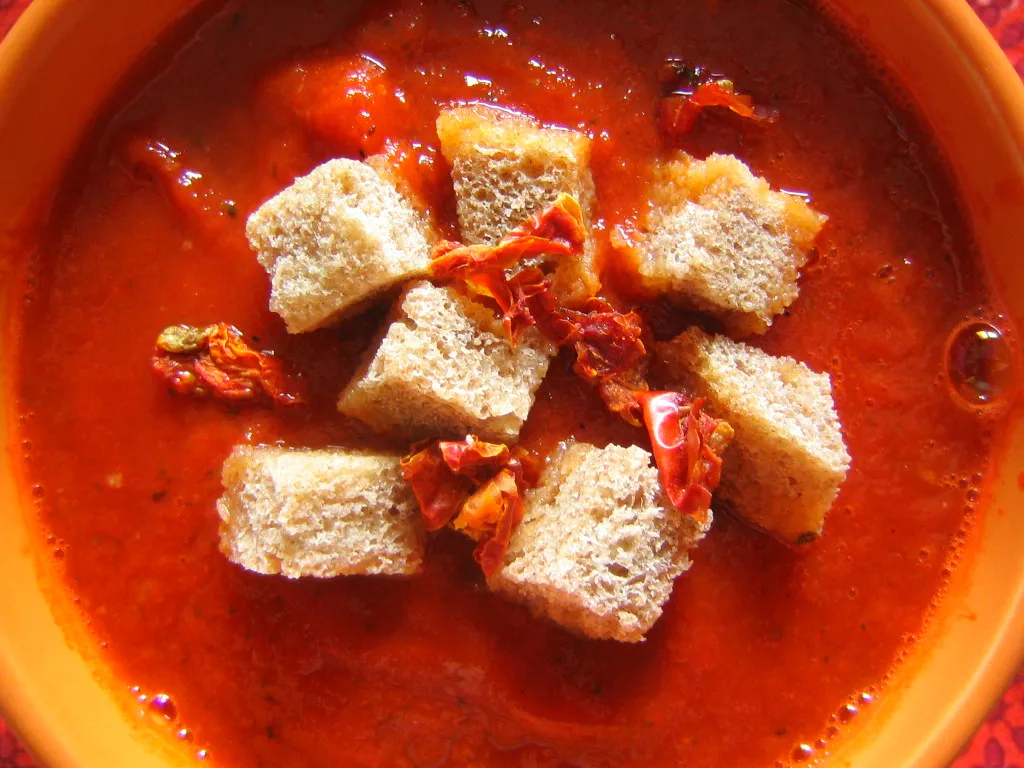
Table of contents
Why tomato soup deserves better than a can
Tomato soup is one of those dishes that most people only know from a can, and that is a shame. A homemade version — ripe tomatoes, roasted or simmered until sweet, blended smooth with cream and a little butter — tastes nothing like the canned kind. It is brighter, richer, and it takes about 40 minutes, most of it hands-off.
The secret is the tomatoes. Good tomatoes make good soup; mediocre tomatoes make a soup that needs a lot of help. In summer, fresh ripe tomatoes are ideal. The rest of the year, good canned whole tomatoes are actually better than pale supermarket fresh ones, because they are picked and packed at peak ripeness.
Roasted or simmered?
Roasting the tomatoes first gives the soup a deeper, slightly caramelized flavor. Cut them in half, toss with olive oil and salt, roast at 400°F (200°C) for 25-30 minutes until soft and starting to char at the edges. The roasting concentrates the flavor and adds a smoky note you cannot get from simmering alone.
If you are short on time, simmering works fine. Cook the tomatoes with onion, garlic, and broth for 20 minutes and blend. The soup will be brighter and fresher tasting, a little less deep. Both versions are good; roasted is better when you have the time.
The cream question
Cream is what turns tomato soup from a thin broth into something silky and comforting. Heavy cream gives the richest result. Half-and-half works and is lighter. A swirl of crème fraîche on top at serving time adds tang without thinning the soup. Add the cream at the end, off the boil — boiling cream can split and turn grainy.
For a dairy-free version, blend in a handful of soaked cashews or a can of full-fat coconut milk. The cashew version is surprisingly close to cream in texture.
Balancing acidity
Tomatoes are acidic, and the soup can taste sharp if the balance is off. A pinch of sugar (not a spoonful) rounds the edges without making the soup sweet. A knob of butter stirred in at the end does the same thing and adds richness. If the soup still tastes too sharp, a splash more cream or a little more salt usually fixes it. Salt is the most important seasoning here — undersalted tomato soup tastes flat and acidic.
Texture: smooth or rustic?
A high-speed blender gives the silkiest soup. Blend in batches, holding the lid down with a towel — hot soup expands and can blow the lid off. An immersion blender is easier and safer, though the texture is slightly less smooth. For a rustic soup, blend only half and leave the rest chunky. Strain the soup through a fine mesh if you want it completely smooth, though most people do not bother.
Common mistakes to avoid
- Using unripe or pale tomatoes. The soup will be acidic and thin. Use good canned tomatoes if fresh ones are not in season.
- Boiling the cream. Add it at the end, off the heat, and stir gently.
- Undersalting. Tomato soup needs more salt than you think. Taste and adjust at the end.
- Blending hot soup with a sealed blender. The steam builds pressure. Blend in batches with the lid vented and a towel on top.
- Overcooking the garlic. Burnt garlic makes the whole pot bitter. Cook it just until fragrant.
Substitutions and variations
- Roasted red pepper tomato soup: Add two roasted red peppers (from a jar is fine) with the tomatoes. It adds sweetness and depth.
- Spicy: A pinch of red pepper flakes or a diced jalapeño with the onion.
- Herby: Fresh basil stirred in at the end is classic. Thyme and rosemary work too, added with the onion.
- Chunky: Skip the blender and leave it rustic with diced tomatoes and a little cream.
- Vegan: Use olive oil instead of butter and coconut milk or cashew cream instead of dairy cream.
Storage and make-ahead
Tomato soup keeps in the fridge for up to 5 days and freezes well for up to 3 months — it is one of the best soups to freeze. Freeze it before adding the cream, then stir the cream in when reheating for the best texture. Reheat gently over low heat, stirring occasionally.
What to serve with it
A grilled cheese sandwich is the classic partner, and the combination is famous for a reason — the crisp, buttery bread and melted cheese are made for dipping. Crusty bread, croutons, or a swirl of pesto on top all work. A simple green salad makes it a full lunch.
How we tested this recipe
We tested this with canned tomatoes and fresh, and good canned tomatoes win for consistency. The cream goes in off the heat so it stays smooth, and a spoon of sugar is only needed if your tomatoes are sharp — taste first.
You might also like Classic Caesar Salad and Homemade Margherita Pizza.
Creamy Tomato Soup
Ripe tomatoes blended silky smooth with cream and butter — brighter and richer than anything from a can, ready in about 40 minutes.
- Prep time
- 10 min
- Cook time
- 30 min
- Total time
- 40 min
- Difficulty
- Easy
- Cuisine
- American
- Course
- Starter
Ingredients
Instructions
- 1
If using fresh tomatoes, toss the halves with 1 tablespoon olive oil and salt. Roast at 400°F (200°C) for 25-30 minutes until soft and lightly charred. If using canned tomatoes, crush them by hand and skip this step.
- 2
Heat the remaining olive oil in a large pot over medium heat. Cook the onion for 5 minutes until soft. Add the garlic and cook 30 seconds until fragrant.
- 3
Add the roasted or canned tomatoes, broth, sugar, salt, and pepper. Bring to a simmer and cook 15-20 minutes.
- 4
Blend the soup until smooth, in batches in a blender with the lid vented, or with an immersion blender. For a silky finish, strain through a fine mesh sieve.
- 5
Return the soup to the pot over low heat. Stir in the butter until melted, then the cream. Do not boil. Taste and adjust salt and sugar.
- 6
Serve hot, topped with fresh basil and a drizzle of cream or olive oil.
Nutrition per serving
- 240 kcal
- Calories
- 3 g
- Protein
- 18 g
- Carbs
- 17 g
- Fat
Tips & notes
Add the cream at the end, off the boil — boiling cream can split. If freezing, freeze before adding the cream and stir it in when reheating.
Frequently asked questions
Can I use canned tomatoes?
Yes, and they are often better than out-of-season fresh tomatoes. Use good whole peeled tomatoes (San Marzano if you can) and crush them by hand before cooking.
How do I make it less acidic?
A pinch of sugar, a knob of butter, and enough salt are the three fixes. Add them one at a time and taste after each.
Can I freeze tomato soup?
Yes, for up to 3 months. Freeze it before adding cream for the best texture, then stir the cream in when you reheat it.
What if I do not have a blender?
An immersion blender works well. Or leave the soup chunky and rustic — it is still delicious. A potato masher gives a rough, hearty texture.