Lemon Herb Roasted Salmon
A fillet, lemon, garlic, and fresh herbs — 15 minutes in a hot oven. Flaky, moist roasted salmon with the doneness tips that keep it from drying out.
- Total time
- 25 min
- Servings
- 4 Servings
- Difficulty:
- Easy
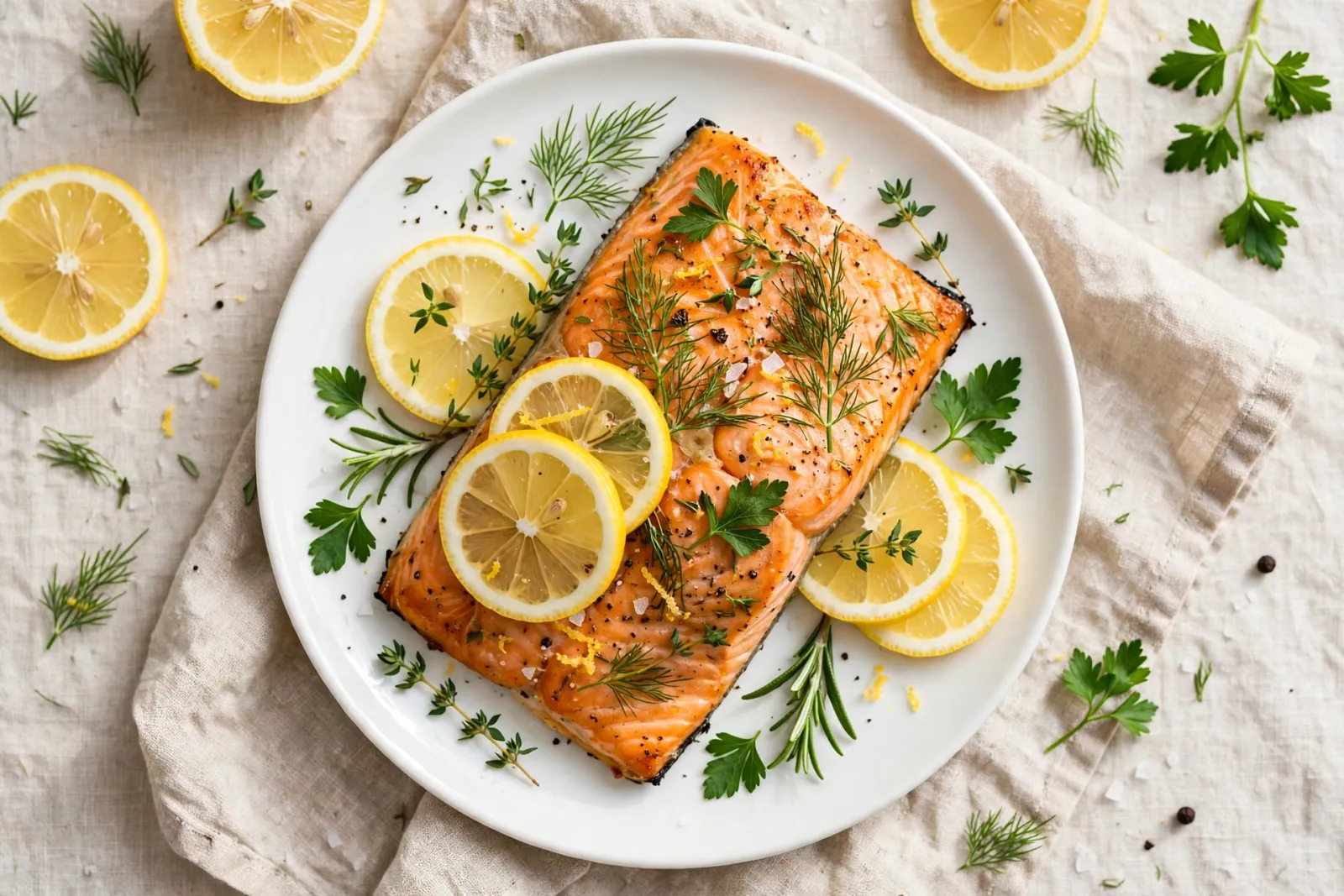
Table of contents
Why roasted salmon is a weeknight staple
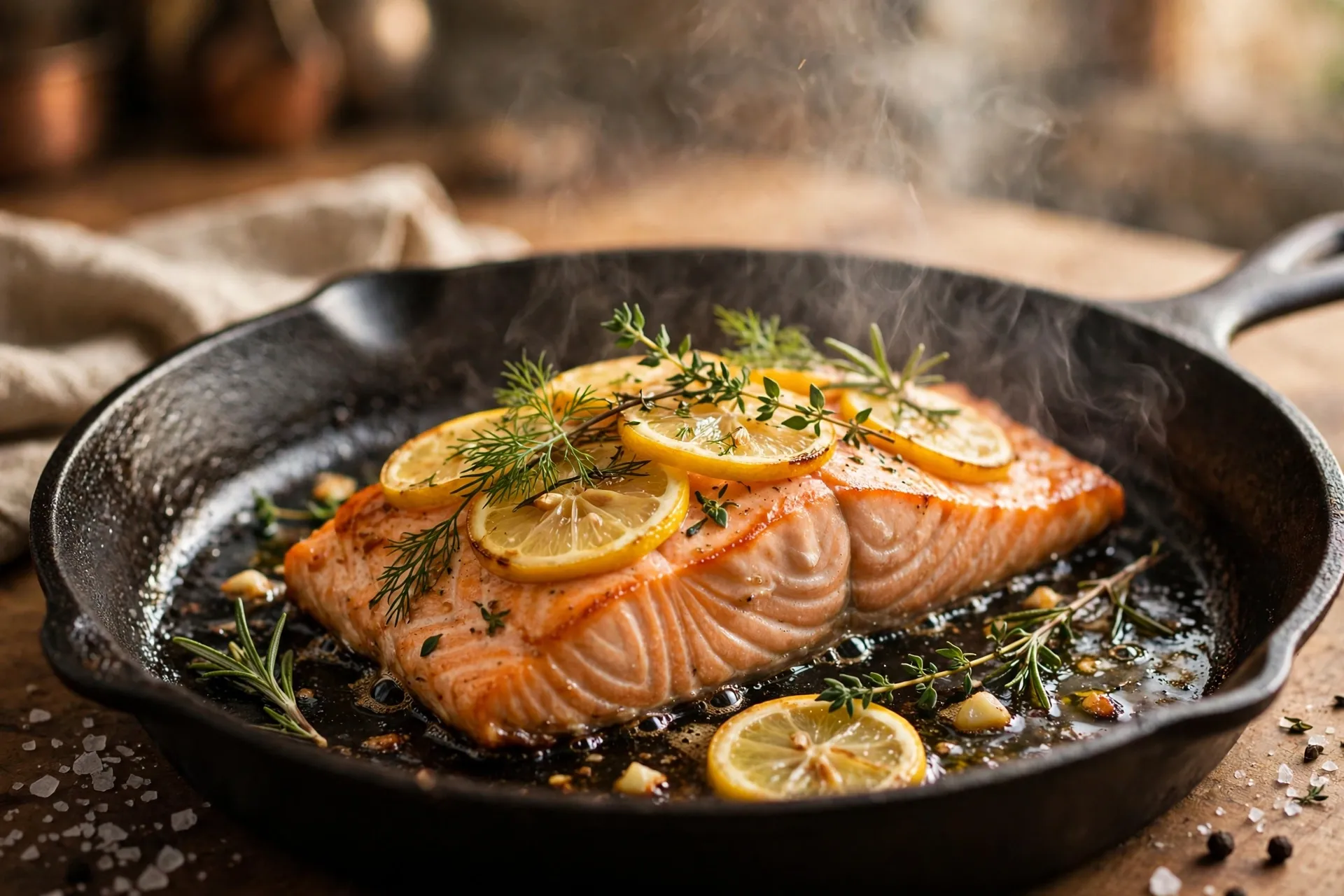
Roasted salmon with lemon and herbs is one of the easiest impressive dinners there is. A fillet, some lemon, garlic, and fresh herbs, 15 minutes in a hot oven — and the result is flaky, moist fish with crisp edges and bright flavor. It is healthy, fast, and it works for a Tuesday night or for guests.
The key is not overcooking it. Salmon goes from perfect to dry in about two minutes. The best test is a fork: the fish should flake easily but still look slightly translucent in the very center when you take it out. It keeps cooking for a minute after it leaves the oven, and that carryover heat finishes the job.
Choosing the salmon
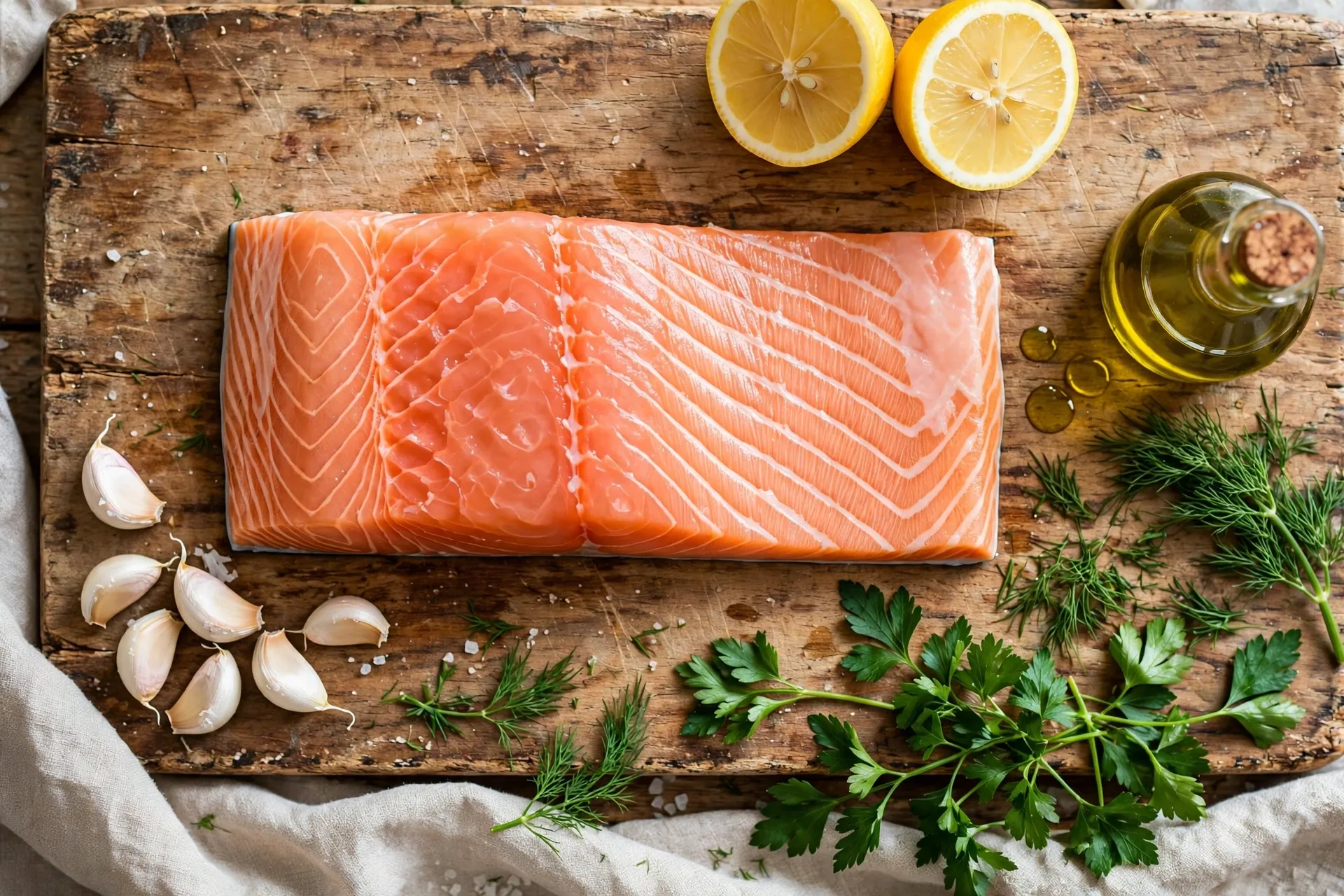
Look for fillets that are bright in color and even in thickness — about 1 to 1 1/2 inches thick. Thinner tail pieces cook faster and dry out, so if your fillet tapers, fold the thin end under. Wild salmon has a deeper flavor and leaner flesh; farmed salmon is milder and fattier, which makes it more forgiving. Both work well roasted.
Buy skin-on if you can. The skin protects the flesh from the heat and crisps up beautifully. If you do not like skin, it peels off easily after cooking.
The lemon herb treatment
Lemon and salmon are a natural pair. Thin lemon slices laid over the fish during roasting soften and perfume the flesh, and fresh juice squeezed over at the end adds brightness. Garlic, olive oil, and fresh herbs — dill, parsley, or thyme — round it out. Keep the seasoning simple. Salmon has a rich flavor of its own, and heavy sauces bury it.
A sheet pan lined with parchment makes cleanup easy and stops the fish from sticking. Roast at 400°F (200°C) — hot enough to crisp the edges without drying the center.
Doneness: the part everyone gets wrong
The USDA says 145°F (63°C) for salmon, but most cooks pull it at 120-125°F (49-52°C) in the thickest part for a moist, medium result. The white stuff that sometimes appears on cooked salmon is albumin — a harmless protein that comes out when the fish is heated too fast or too long. Cooking at a moderate temperature and not overcooking keeps it to a minimum.
If you do not have a thermometer, use the fork test: press the thickest part gently with a fork. If it flakes into clean layers and the center is still slightly glossy, it is done. If it resists, give it two more minutes.
Common mistakes to avoid
- Overcooking. The most common salmon mistake. Pull it when the center is still slightly translucent — carryover heat finishes it.
- Cooking cold fish. Let the fillet sit at room temperature for 15 minutes before roasting so it cooks evenly.
- Too low an oven. Below 375°F (190°C) the salmon steams instead of roasting and the texture goes soft.
- Not drying the fish. Pat it dry before seasoning or the surface steams instead of browning.
- Overdoing the sauce. Lemon, garlic, and herbs are enough. Heavy cream sauces overwhelm salmon.
Substitutions and variations
- Different herbs: Swap dill for thyme, rosemary, or tarragon. Each gives a different character.
- Honey glaze: Brush the fillet with a mix of honey, soy sauce, and garlic before roasting for a sweet-savory version.
- Mustard crust: Spread a thin layer of Dijon mustard and top with breadcrumbs for a crisp crust.
- Other fish: The same method works for trout, cod, or halibut — adjust the time for thickness.
- Grilled: The same seasoning works on a grill. Use a grill basket or a sheet of foil to stop the fish falling through.
Storage and make-ahead
Leftover salmon keeps in the fridge for up to 3 days. It is best eaten cold the next day — flaked over a salad or in a sandwich — because reheating usually dries it out. If you do reheat, use a low oven (275°F / 135°C) for 10 minutes. Salmon does not freeze well after cooking, but raw fillets freeze fine for up to 3 months.
What to serve with it
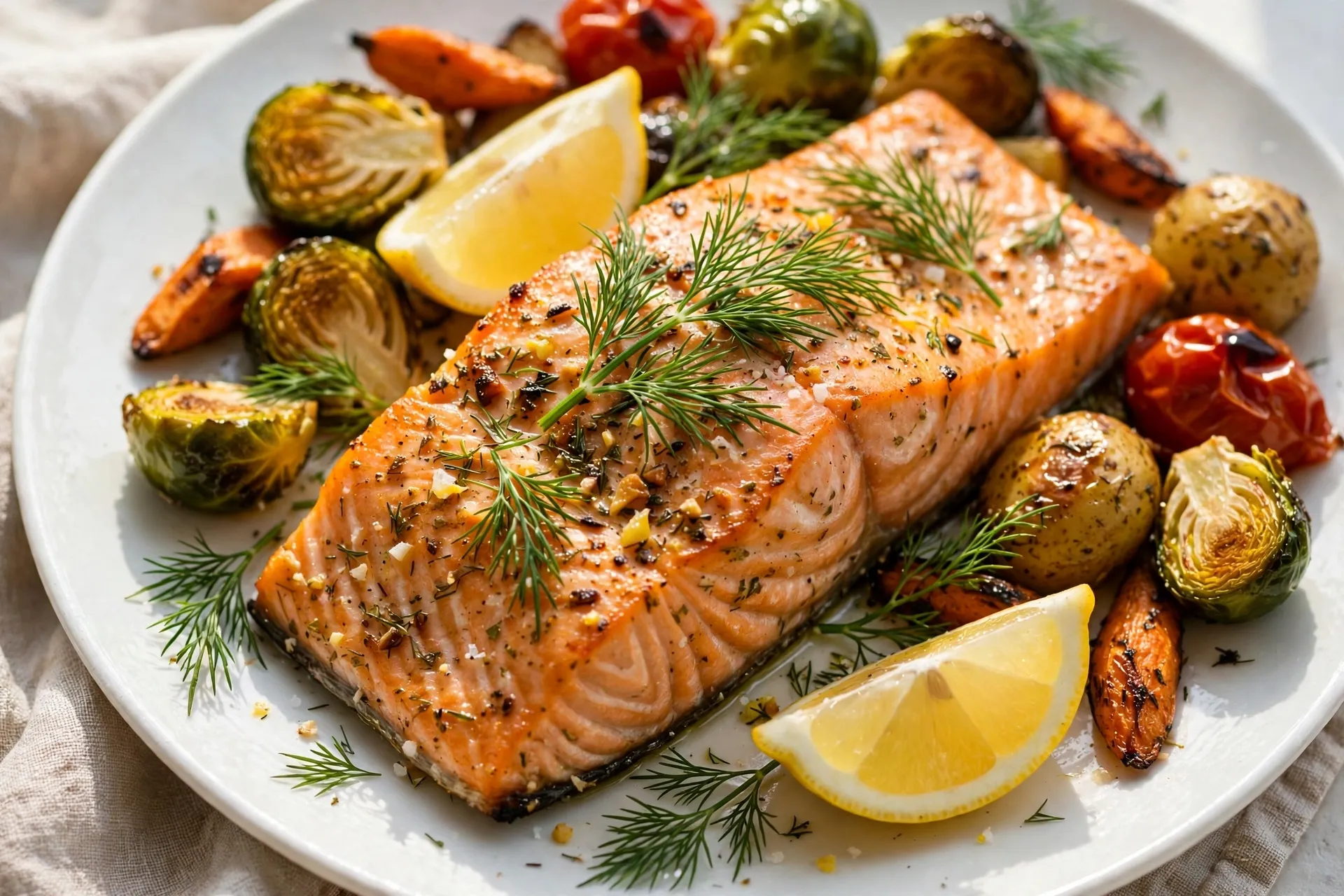
Roasted vegetables (asparagus, green beans, or Brussels sprouts) can roast on the same sheet pan. Rice, quinoa, or roasted potatoes make it a full meal. A simple salad with a lemon vinaigrette keeps the meal light. A glass of dry white wine or sparkling water fits.
How we tested this recipe
We tested the salmon at a slightly lower temperature for a few minutes longer, and it stays moist instead of drying at the edges. The lemon and herbs go on before roasting so the flavour sinks in, and the fish is done when it flakes easily but is still a little glossy inside.
You might also like Garlic Butter Shrimp and One-Pan Lemon Herb Chicken and Rice.
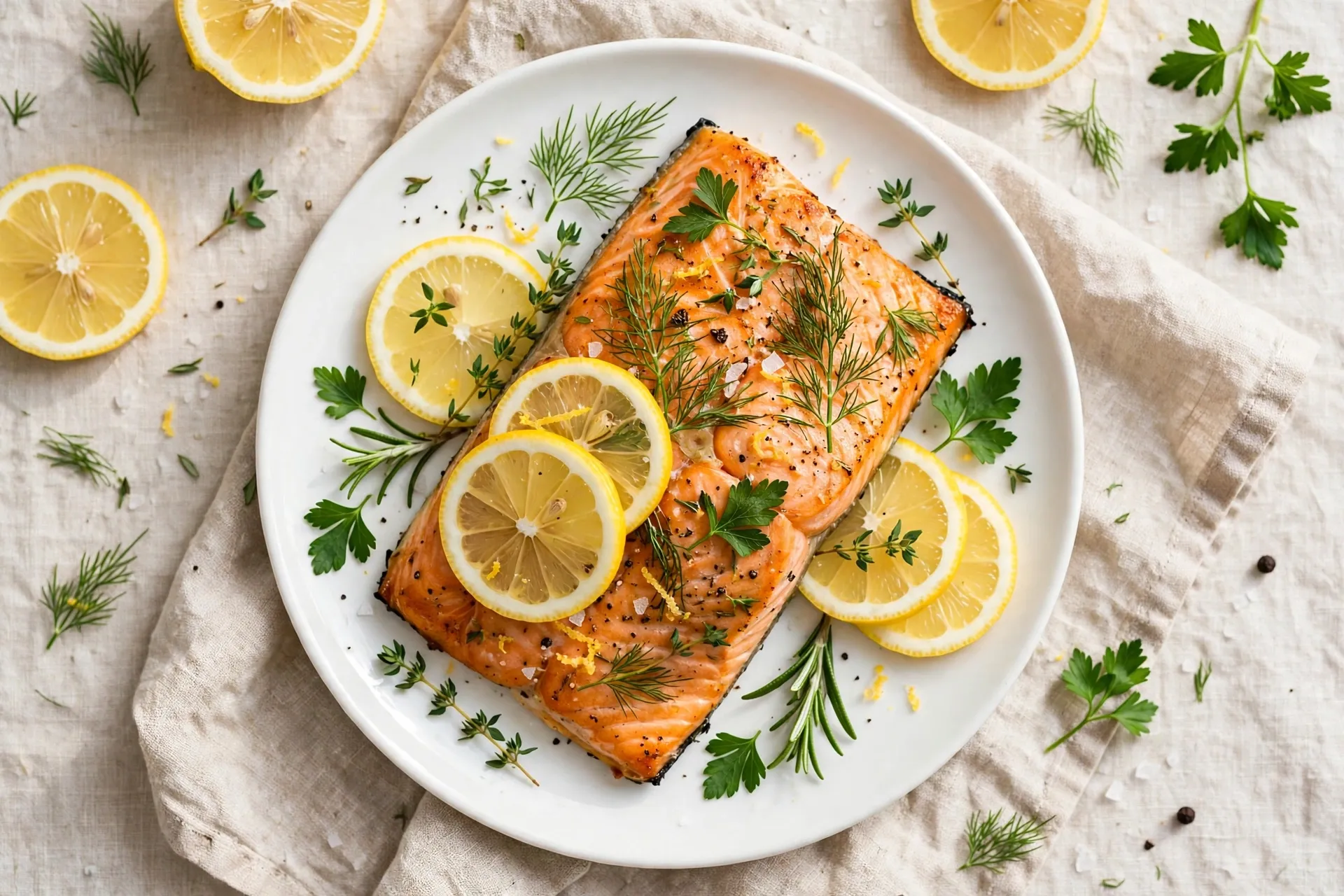
Lemon Herb Roasted Salmon
A fillet, lemon, garlic, and fresh herbs — 15 minutes in a hot oven. Flaky, moist roasted salmon with the doneness tips that keep it from drying out.
- Prep time
- 10 min
- Cook time
- 15 min
- Total time
- 25 min
- Difficulty
- Easy
- Cuisine
- Mediterranean
- Course
- Main course
Ingredients
Instructions
- 1
Preheat the oven to 400°F (200°C). Line a sheet pan with parchment.
- 2
Let the salmon sit at room temperature for 15 minutes. Pat the fillets very dry with paper towels.
- 3
Mix the olive oil, garlic, dill, parsley, salt, and pepper. Rub the mixture over the flesh side of each fillet.
- 4
Place the fillets skin-side down on the sheet pan. Lay lemon slices over the top of each fillet.
- 5
Roast 12-15 minutes, depending on thickness, until the salmon flakes easily with a fork but is still slightly translucent in the center.
- 6
Squeeze the remaining lemon half over the fish and serve immediately.
Nutrition per serving
- 340 kcal
- Calories
- 36 g
- Protein
- 2 g
- Carbs
- 20 g
- Fat
Tips & notes
Pull the salmon when the center is still slightly translucent — carryover heat finishes it. Let the fish sit at room temperature for 15 minutes before roasting so it cooks evenly.
Frequently asked questions
How do I know when salmon is done?
It should flake easily with a fork but still look slightly translucent in the very center. An instant-read thermometer should read 120-125°F (49-52°C) for medium, or 145°F (63°C) if you prefer it fully cooked through.
Should I remove the skin before cooking?
No. The skin protects the flesh and crisps up in the oven. It peels off easily after cooking if you do not want to eat it.
Can I use frozen salmon?
Yes. Thaw it overnight in the fridge, or in cold water for 30 minutes. Pat it very dry before seasoning and roasting.
What is the white stuff that comes out of cooked salmon?
That is albumin, a harmless protein. It appears when salmon is cooked too fast or too long. A moderate oven temperature and not overcooking keeps it to a minimum.