Fluffy Buttermilk Pancakes
Buttermilk and baking soda are the secret to tall, fluffy pancakes — light inside, golden outside. A 20-minute weekend breakfast with the mixing rules that matter.
- Walid
- Breakfast & Desserts
- November 21, 2026
- 3 min read
- Total time
- 25 min
- Servings
- 4 Servings
- Difficulty:
- Easy
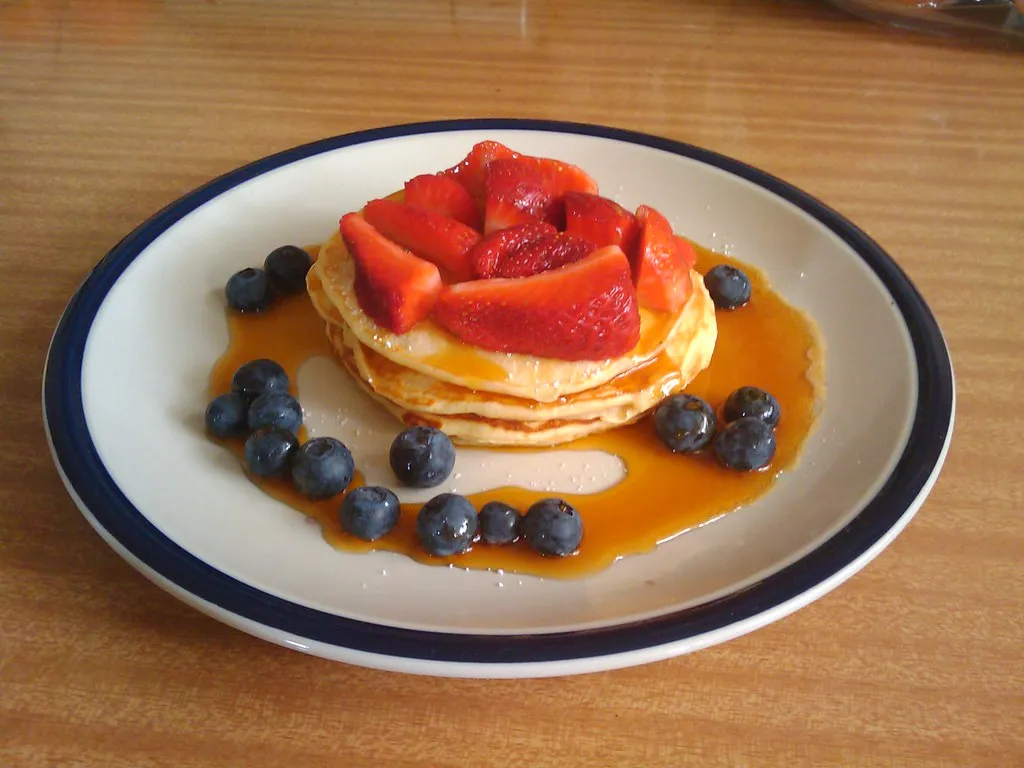
Table of contents
Why buttermilk makes the fluffiest pancakes
The difference between a flat, dense pancake and a tall, fluffy one is almost always the same thing: buttermilk and baking soda. Buttermilk is acidic, and when it meets baking soda it produces carbon dioxide — tiny bubbles that lift the batter as it cooks. The result is a pancake that is light and airy inside with a golden, slightly crisp outside.
These pancakes take about 20 minutes and use one bowl. They are the weekend breakfast that is worth getting up for, and the batter comes together faster than the coffee brews.
The batter
The batter should be thick and lumpy. That sounds wrong, but it is the key to fluffy pancakes. Overmixed batter develops gluten, and gluten makes pancakes tough and flat. Stir the wet and dry ingredients together until the flour just disappears — lumps are fine, and they cook out in the pan.
Let the batter rest for 5 minutes before cooking. The flour hydrates, the baking soda starts working, and the pancakes rise better. If the batter thickens too much while resting, add a splash of milk.
The pan and the heat
Medium heat is the right temperature. Too hot and the outside burns before the inside cooks. Too cool and the pancakes spread and turn pale. A good test: sprinkle a few drops of water on the pan. If they dance and evaporate in a couple of seconds, the pan is ready.
Butter the pan lightly between batches. A little butter adds flavor and helps the pancakes brown, but too much makes them greasy. Wipe out the pan with a paper towel if the butter starts to brown too much between batches.
When to flip
Wait for bubbles. When bubbles appear across the surface and the edges look set and dry, about 2-3 minutes, the pancake is ready to flip. Flip once, gently, and cook the second side for 1-2 minutes. Flipping more than once deflates the pancakes and makes them dense.
Common mistakes to avoid
- Overmixing the batter. Lumps are fine. Overmixed batter makes flat, tough pancakes.
- Pan too hot. The outside burns before the inside cooks. Use medium heat.
- Flipping too early or too often. Wait for bubbles across the surface. Flip once.
- Pressing the pancakes with the spatula. It squeezes out the air you just built. Leave them alone.
- Using old baking soda. It loses strength after about six months. If your pancakes are flat, the baking soda is the first thing to check.
Substitutions and variations
- No buttermilk? Mix 1 cup of milk with 1 tablespoon of lemon juice or white vinegar and let it sit for 5 minutes. It works the same way.
- Add-ins: Blueberries, chocolate chips, or sliced banana folded into the batter. Add them to each pancake in the pan rather than the batter so they distribute evenly.
- Whole wheat: Replace half the flour with whole wheat flour for a heartier pancake. Add a splash more milk — whole wheat absorbs more liquid.
- Dairy-free: Use oat milk with lemon juice instead of buttermilk, and oil instead of butter.
- Lemon ricotta: Add 1/2 cup ricotta and the zest of a lemon for a richer, tangier pancake.
Storage and make-ahead
Cooked pancakes keep in the fridge for up to 3 days and freeze well for up to 3 months. Freeze them in a single layer on a tray, then store in a bag with parchment between them. Reheat in the toaster or a low oven — the microwave makes them soggy. The batter can be mixed the night before and kept in the fridge, though it loses some lift overnight. Stir gently before cooking.
What to serve with them
Maple syrup and butter are the classic. Fresh berries, sliced banana, or a dollop of whipped cream make them feel special. Bacon or sausage on the side adds a salty contrast. For a bigger breakfast, serve with eggs and coffee.
How we tested this recipe
We tested the batter with a short rest — five minutes is enough for the baking powder to start working, and the pancakes come out taller. The pan should be hot enough that a drop of water sizzles, but not so hot that the outside browns before the inside cooks.
You might also like Easy Banana Bread and Classic Chocolate Chip Cookies.
Fluffy Buttermilk Pancakes
Buttermilk and baking soda are the secret to tall, fluffy pancakes — light inside, golden outside. A 20-minute weekend breakfast with the mixing rules that matter.
- Prep time
- 10 min
- Cook time
- 15 min
- Total time
- 25 min
- Difficulty
- Easy
- Cuisine
- American
- Course
- Breakfast
Ingredients
Instructions
- 1
Whisk the flour, sugar, baking powder, baking soda, and salt in a large bowl.
- 2
In a separate bowl, whisk the buttermilk, eggs, melted butter, and vanilla.
- 3
Pour the wet ingredients into the dry and stir until just combined. The batter should be thick and lumpy — do not overmix.
- 4
Let the batter rest for 5 minutes.
- 5
Heat a pan or griddle over medium heat. Lightly butter the surface.
- 6
Pour 1/4 cup of batter per pancake. Cook 2-3 minutes until bubbles appear across the surface and the edges look set.
- 7
Flip once and cook 1-2 minutes more until golden. Keep finished pancakes warm in a 200°F (95°C) oven while you cook the rest.
- 8
Serve with butter and maple syrup.
Nutrition per serving
- 280 kcal
- Calories
- 8 g
- Protein
- 38 g
- Carbs
- 9 g
- Fat
Tips & notes
Do not overmix — lumps in the batter are fine and the pancakes will be fluffier. Flip once, when bubbles appear across the surface. Check that your baking soda is fresh; old baking soda makes flat pancakes.
Frequently asked questions
Why are my pancakes flat?
Usually overmixed batter or old baking soda. Stir until just combined and check that your baking soda is fresh — it loses strength after about six months open.
Can I make the batter the night before?
Yes, but it loses some lift overnight. Stir it gently in the morning and add a splash of milk if it has thickened. The pancakes will still be good, just slightly less tall.
What can I use instead of buttermilk?
Mix 1 cup of milk with 1 tablespoon of lemon juice or white vinegar and let it sit for 5 minutes. It curdles slightly and works the same way in the recipe.
How do I keep pancakes warm while I cook the batch?
Keep them on a plate in a 200°F (95°C) oven, loosely covered with foil. They stay warm without drying out.